 English
 Español
 Português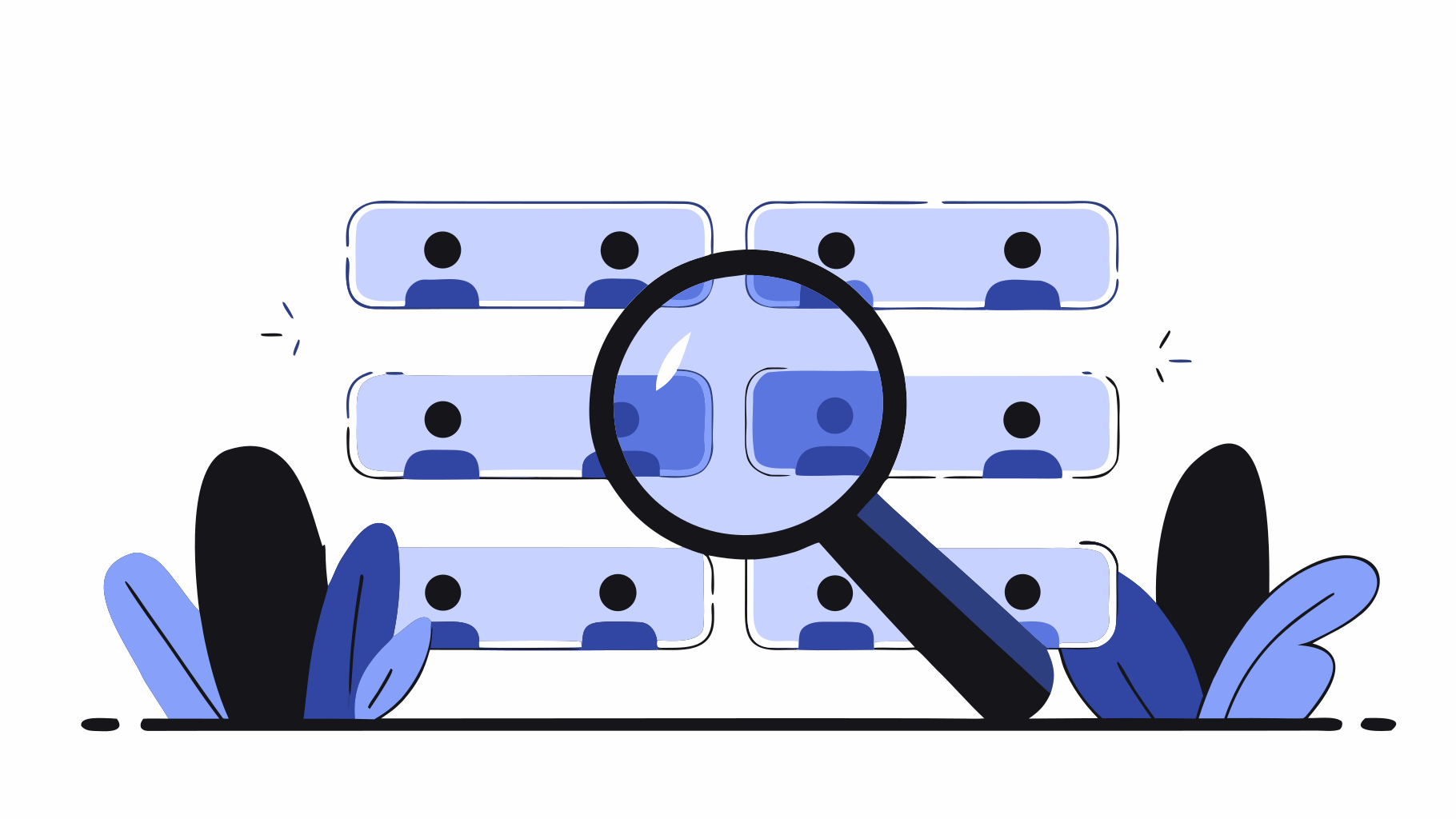
An agent on your floor handles maybe 40 calls a day. Over 20 working days, that's about 800 conversations a month. Your QA team, if it's well resourced, reviews one or two of every hundred.
Run the 2% case. Out of 800 calls, 16 get assessed. 784 nobody will ever hear. At 1%, closer to what most teams actually sustain once leave and month-end pressure bite, it's 8 heard and 792 gone.
These are example numbers. Yours will be different, but the shape holds. So do the sum for your own operation. Take your agents, times their daily calls, times 20 working days. Put that next to the number of reviews your QA team finished last month. That ratio, not the scores in the report, is what your quality program really knows. Most leaders have never run it. It takes about five minutes.
The sample is never the problem calls
Here's the part that should worry you. The calls that get reviewed are not a random 2%. They cluster around whatever is easy to pull, and around whoever is already on a coaching plan. The sample tells you most about the reps you already watch.
Think about what sits in the unheard pile.
The enquiry that quietly failed to convert, because one objection got a weak answer and the customer said they'd think about it. Lost enquiries don't volunteer themselves for the fortnightly calibration.
The hardship call that went wrong under pressure. A required disclosure got skipped because the agent was busy with a distressed customer.
And the best call your team took all month. The one worth playing at the next huddle. Nobody knows it happened.
Our founder ran sales teams for years. He refereed one argument more times than he cares to remember. Marketing runs a campaign. Leads flow. Sales doesn't convert them. The agents say the leads were rubbish. Marketing says the agents fumbled them. Everyone reaches for a theory. The evidence that would settle it sits in hundreds of recorded conversations that sampling means nobody will hear.
For regulated operations the stakes are higher. If a responsible-lending disclosure was missed, the sample that would have caught it is the one you did not take. "We review a representative sample" sounds very different to a regulator than it does to you.
The gap you cannot see through a keyhole
We can put a number on what sampling hides. In CallCoach, our own product, we've scored hundreds of thousands of calls across dozens of teams, every call marked on the same closing criteria.
Inside a single team, under one manager, the strongest and weakest rep sit about 16 points apart on a 100-point scale. That's measured on behaviour scores, which show how the call was handled. It is not measured on revenue.
Now picture a manager sampling 2%. That's roughly one call per rep per fortnight. You can't see a 16-point spread through that keyhole, let alone coach it closed. The spread is real. It costs conversions and consistency, and the sample walks straight past it.
What changes when you hear all of it
Open Universities Australia runs about 70 student advisors across six teams, handling a mix of inbound service and sales-driven enquiries. This example runs on our product. Under sample-based QA, most of their calls went unassessed. New advisors took a long time to get consistent.
They moved to analysing 100% of calls against their own quality criteria. Within two months, new advisors were up to speed in four weeks, not six. Communication effectiveness and tone of voice rose 10 to 15 per cent on those same criteria. And team leaders stopped spending the week pulling and scoring calls. They spent it coaching instead. (Case study.)
That last change is the one to sit with. The work shifts from finding out what happened to doing something about it.
Hear everything, then coach after the call
Once software can hear every call, there's a tempting next step: prompt the agent live, mid-conversation. Don't. Splitting an agent's attention during a real conversation makes the call worse. You've managed agents, so you probably suspect that already.
Review the whole conversation after it ends. Return feedback fast enough to use before the next shift. We built our product that way on purpose.
So, before you take any vendor's call, ours included, run the sum from the top. Take your agents, times their daily calls, times 20 days, against the reviews QA finished last month. Put that ratio next to what the report claims to know. It will tell you more than any sales conversation will.
If you want to see the gap closed in practice, the Open Universities Australia case study is a ten-minute read. And when you do start talking to providers, our security page covers the data-handling questions a regulated business should ask first.